Initiation and progression of kidney and liver cancers - Zakład Biochemii Ogólnej
- Content
- Content
-
Molecular and cellular mechanisms of initiation and progression of kidney and liver cancers -
dr hab. Katarzyna Miękus, prof. UJ, dr Paulina Marona, dr Judyta Górka, mgr Rafał Myrczek
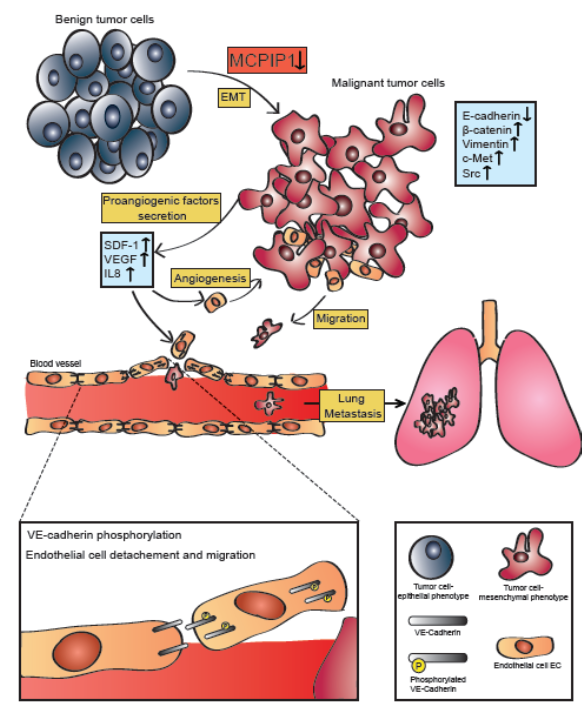
The success of anticancer therapy is limited by the developing resistance to treatment, which is one of the most difficult problems in modern oncology. Therefore, understanding the mechanisms responsible for the initiation, progression and response to treatment can help develop new diagnostic methods and improve clinical benefits. The results obtained by our team indicate that MCPIP1, a negative regulator of the inflammatory response, plays an important role during the progression of ccRCC and the formation of metastases, regulating the proliferation, apoptosis and angiogenesis of cancer cells. The level of MCPIP1 is significantly reduced in cancer cells, and silencing of MCPIP1 correlates with the phenotype of mesenchymal cells, important during the metastasis process. Moreover, it seems that MCPIP1 also regulates the acquisition of resistance to the anticancer therapies used. However, the mechanism of action of MCPIP1 affecting the subsequent stages of cancer development and the level of cellular and molecular biological regulation has not been explained. The research conducted by our group aims to analyze the molecular influence of MCPIP1 on the development and course of kidney and liver cancer. In our research, we use cell lines, isolated primary cells, patient material and animal models.